It Started With a 9:47 Phone Call
It was 9:47 on a Thursday night when my phone buzzed. Unknown number. At that hour, it's never good news. On the other end was Sarah, the production manager at a local event company. She had a problem: 40 acrylic signs, 12 brushed aluminum nameplates, and 8 metal display brackets all had to be on site by Sunday morning. Her regular laser shop had just called to say their machine was down. One broken power supply, one missed deadline, and a very unhappy corporate client.
I told her to send the files. I'd look them over by 10:30. Normal turnaround for an order like this is five days. We had about 58 hours from file receipt to delivery. Honestly, I wasn't sure we could do it. But I've handled enough rush orders to know the first hour decides whether a job lives or dies.
In my role coordinating production at a small laser shop, I've processed 47 rush orders in the last quarter alone, and 95% made their deadlines. This one felt different. It wasn't one machine problem—it was three different materials, two different laser technologies, and one immovable date.
The Boss Laser 1420 vs. the Clock
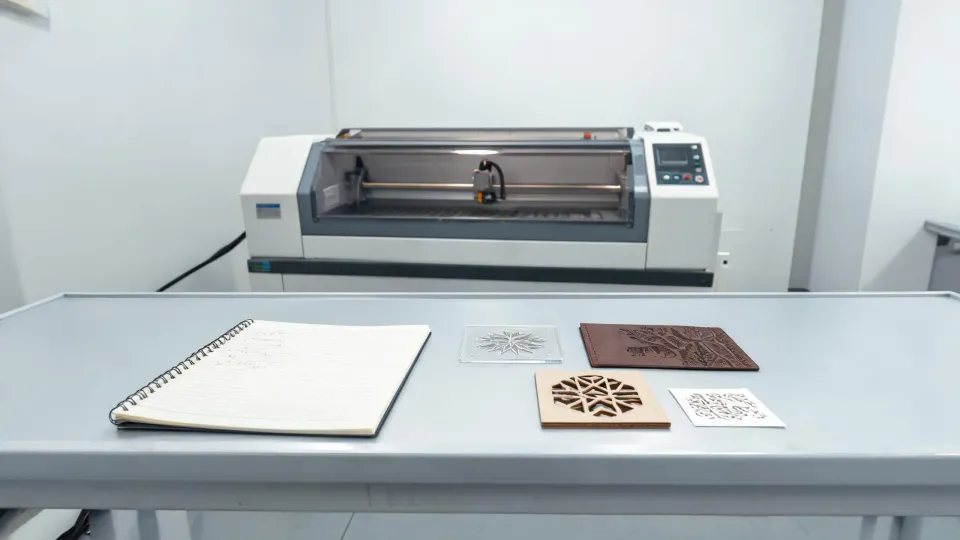
We had taken delivery of our Boss Laser 1420 about two weeks earlier. The 20×28 inch work area made it the largest CO2 laser we'd ever owned. Our older Boss Laser LS 1415 still sits in the corner for smaller prototypes. But for this job, the 1420 was the right tool. The bigger bed meant we could nest two 12×18 panels per run instead of cutting one at a time. If Sarah's order had required full 4×8 sheets, we'd have been looking at a 4x8 flatbed laser cnc engraving cutting machine. For these panels, the 1420 was enough.
Sarah's files arrived at 10:12. The engraving files were clean, but there were no cut paths—just a note saying, “You're the laser people, you know how to do the rest.” I laughed, then got to work.
This is the part most buyers miss. They focus on wattage and work area, but the real difference between a laser that works and a laser that fights you is in the details: the lens, the air assist, the focus routine, the software behavior. When I compared the Boss Laser 1420 with the entry-level machine we started on five years ago, the gap was way bigger than I expected. Same power, same material, but the cut edges were cleaner and the repeatability was night and day. It's basically the difference between a hobby tool and a production tool.
I only understood that after losing $800 on a resin-coated acrylic batch because I skipped the standard lens check. The manual said test every new batch. I didn't listen. The edges came out rough and the client rejected all 14 pieces. Now I check the lens, focus, and air pressure before every run. That habit is what saved Sarah's order on Thursday night.
The question everyone asks is “How many watts?” The question they should ask is “What happens when the job goes wrong?” A machine is easy to buy. Support is not.
A Fiber Welder Laser Fixes What a CO2 Laser Can't
While the acrylic was engraving, I tackled the metal brackets. They were 1/8-inch steel with two broken spot welds where the legs attached to the base. The client needed them repaired, not replaced—fabricating eight new ones from stock would have taken too long.
This is where fiber laser welding tools have changed the game. We don't own one, but a friend down the street lets us use his. A fiber welder laser is basically a handheld focused heat source. You clamp the parts, pulse it, and the steel fuses without filler rod. It took about four minutes per bracket, including setup. A CO2 laser welder can handle thin materials, but for this job the fiber welder laser was the right call. Better control on the thicker steel, less distortion, no grinding afterward.
Five years ago, a fiber welder laser felt like a factory-scale investment. Now it's down the street in a three-person shop. What was best practice in 2020 doesn't always apply in 2025. The fundamentals of good fabrication haven't changed, but the execution has transformed.
Saturday: The Color Problem
Everything was on track until Saturday morning. Sarah sent a photo of the client's brand color next to one of our sample panels. The blue we'd engraved didn't match. On my screen it looked okay, but the LED-lit sign would be sitting right next to the client's printed backdrop. The mismatch was obvious.
We had two choices: deliver 40 signs with the wrong blue, or recut them with correct-color acrylic we had in stock. I'd ordered extra sheets because this was a rush job—every experienced laser operator does that. We spent Saturday morning re-engraving the signs in the darker blue. It took six hours, but we finished by 4 PM.
Dodged a bullet there. We were one sheet short of disaster. That extra $90 of acrylic saved a $12,000 order.
The Payoff and the Lessons
By 7 PM Saturday, all 40 signs were packed, the nameplates were marked, and the brackets were ready. Sarah's team installed everything Sunday morning. The client sent a photo of the finished display at noon. I still have it on my phone.
There's something satisfying about pulling off a rush job that should have gone sideways. After the stress and the late hours, seeing it delivered on time—that's the payoff. But the real value is in the lessons, because the next deadline is always coming.
- Clean files from the client are half the battle. Bad files eat up more time than the cutting itself.
- The right laser is not just about max power. A clean lens, reliable repeatability, and fast support are worth more than an extra 10 watts.
- Know your materials. Acrylic behaves differently than aluminum, and metal usually means fiber, not CO2.
- Build in a buffer. A 48-hour cushion isn't laziness—it's a business policy. When something breaks on a Sunday, you'll be glad you scheduled slack.
When I compare the Boss Laser 1420 to the machines we had before it, I keep coming back to one thing: confidence. I don't cross my fingers when I hit start. The technology keeps evolving, and now even a small shop can handle a 72-hour rescue without losing the client. Or the profit.