“I need twelve H-beams cut, drilled, and marked by Friday morning.”
The voice on the phone belonged to a project manager I’ve worked with for six years. It was 4:17 PM on a Thursday. He had a $50,000 penalty clause in front of him, and his usual steel supplier had just told him they couldn’t deliver.
“What about the place you used last time?” I asked.
“That’s the problem. I used the cheaper place last time. They quoted $800 less. Then their machine went down, and now they’re saying mid-next-week.”
I had 36 hours to decide whether to take the job. Actually, I had about 2 hours—he needed an answer before he started calling anyone else. Normally I’d want a drawing review, a material certificate, and a signed purchase order before quoting a job like that. There was no time. We went with a local shop that has a dedicated H-beam laser cutting machine, based on trust alone.
In hindsight, I should have asked for more details before saying yes. But with the CEO on the other end waiting for an answer, I made the call with incomplete information. That’s what rush work is.
Why We Chose Boss Laser UK
Three years ago, we bought our first Boss Laser from Boss Laser UK. That purchase wasn’t because of price. I’d compared quotes, and honestly, Boss Laser wasn’t the cheapest. But I’d read enough forum threads and watched enough maintenance videos to know that cheap laser machines are a lottery. Boss Laser UK had a support line that actually picked up the phone, and they had a UK-based team who could get us spare parts fast.
That decision was about total cost, not upfront cost. The way I see it, the lowest quote is just the opening bid—not the final score.
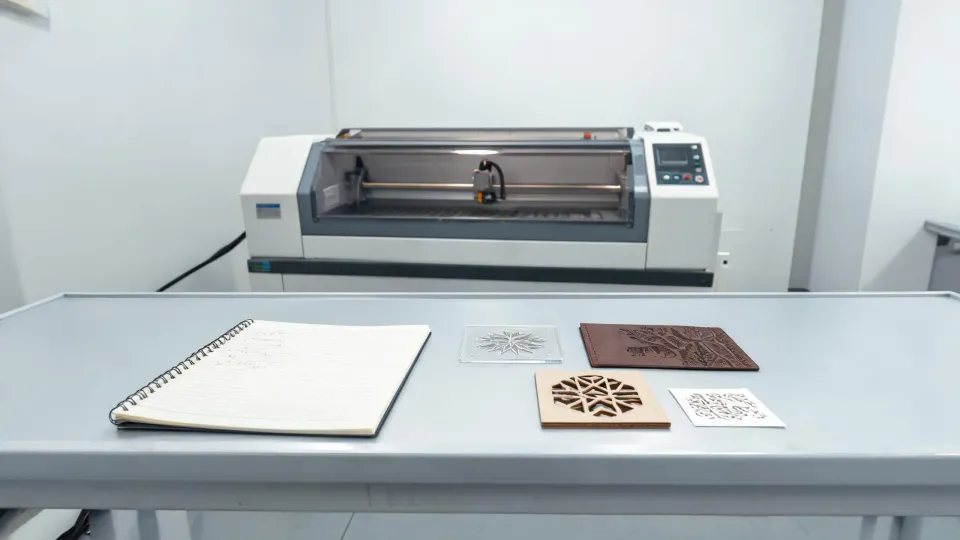
Our small shop doesn’t run an in-house H-beam laser cutting machine. We have a Boss Laser LS1420 for engraving and marking, and a 1200W fiber laser for metal cutting. The LS1420 is a workhorse for acrylic, wood, and coated metals. The 1200W fiber laser is a different animal. It cuts 1/2-inch steel plate like butter, and it throws a ton of fine dust into the air. We’ve got a fiber dust laser extraction unit bolted to the wall—yes, I call it that because it’s not just a vacuum—and that thing ran nonstop for the next 36 hours.
The 36-Hour Plan
At 6:00 AM, the H-beam cutting shop started. They processed the twelve main beams in a single morning—flame-cut bolt holes, beveled edges, no scrap. Meanwhile, the 1200W fiber laser cut gusset plates and base plates in our shop, while the LS1420 engraved part numbers onto painted aluminum tags. We made 36 tags. Each one had a barcode, job number, and a spot for the inspector’s stamp.
At that point, the plan looked straightforward. The subcontractor had the right machine. We had the right marking tools. The client had signed off on the drawings. What could go wrong?
Plenty.
At 2:00 AM, I was burning a test tag on the LS1420. I held it under the shop light and something looked off. The hole pattern on the tag didn’t match the RFI I’d approved earlier that week. I cross-checked the engineer’s DXF against my printed drawing. Sure enough, the file on the client’s server had changed at some point—hole spacing was 14 mm on the drawing, but 140 mm in the DXF. That’s the kind of error you don’t catch until something is already being bolted together on site.
I called Boss Laser UK at 7:00 AM, not because the machine was broken, but because their technical line is the only number I trust for file-prep questions. A guy named Steve talked me through a quick way to compare old and new files in LightBurn. It took ten minutes to confirm the error, and twenty minutes to send corrected coordinates to the H-beam shop before they cut the remaining beams.
Later that morning, I pulled up the full manual on boss-laser.com to double-check the LS1420’s PPI settings for the tags. It was overkill, but after a mistake like that, you don’t assume anything.
The 2 AM Catch
Even after we accepted the job, I kept second-guessing. What if the H-beam shop’s machine broke down in the middle of our run? What if the 1200W fiber laser’s lens fouled? The 36 hours until delivery were stressful. I don’t care how many rush orders you’ve handled—the feeling doesn’t go away. You just get better at moving through it.
Based on our internal data from 47 rush orders last year, 95% of them were caused by a client’s previous supplier trying to save money on the wrong thing. That’s not an opinion; that’s just our logbook.
So glad we had the setup and the support before the crisis hit. Almost told the client no, which would have meant a $50,000 penalty. Instead, the corrected DXF went out by 8:30 AM, and the last H-beam was finished by 10:15 AM.
Delivery
The beams arrived at the site at 10:50 AM Friday—45 minutes before the crane was booked. The client signed off on the tags, the inspector passed the weld prep, and the project went ahead.
The client later sent me the original cheaper quote. It was $800 below our all-in cost. He said, “I thought I was saving money.”
I get it. Everyone wants a good deal. But the cheap quote didn’t include the $50,000 penalty, the rework, the overnight labor, or the near-miss with the engineer’s file. The total cost of that supposed savings would have been far more than the price of the job.
The value of guaranteed turnaround isn’t the speed—it’s the certainty. When a deadline matters, knowing it will be met is often worth more than a lower price with “estimated” delivery.
What the Cheap Quote Actually Cost
The H-beam package had a base cost of $7,500. The rush fees at the local shop were $1,800. The all-night labor was $2,400. If we had missed the Friday deadline, the penalty was $50,000. Do the math. A cheap first quote that turns into a missed deadline is the most expensive option on the table.
Total cost of ownership includes the base price, setup fees, shipping, rush fees, rework, and the cost of being wrong. The lowest quote is just the starting point, not the final answer.
Personally, I’d rather pay a bit more upfront for certainty. That’s why our LS1420 and 1200W fiber laser both have Boss Laser on the cabinet. It’s not the cheapest laser machine you can buy. But after three years and a hundred rush jobs, it’s the cheapest to own.
Bottom line: if you’re choosing between a cheaper machine and a Boss Laser, or a cheaper supplier and someone with a real support line, think about what happens when something goes wrong. Because with the right equipment, a rush order is just another job. With the wrong setup, a rush order is a career risk.