-
Scenario A: You cut or engrave wood, acrylic, leather, glass, or stone
-
Scenario B: You mark bare metal or need production-scale marking
-
Scenario C: You weld or repair metal — especially on-site
-
Wait — are you searching for "pain CO2 laser"?
-
How to determine which scenario you're in
-
A note for the "CO2 laser Brooklyn" searchers
-
Bottom line
Something is probably on fire. Or about to be. Maybe a client just emailed at 9 p.m. needing 200 engraved plaques by Friday. Maybe your current machine died mid-run. Maybe you've spent three nights searching "CO2 laser Brooklyn" because you need a local shop to save you.
I get it. I'm the person clients call when there's no time left. In my role coordinating equipment purchases for shops that need machines yesterday, I've triaged dozens of rush orders — including same-day turnarounds for trade show clients and emergency replacements for manufacturers staring down five-figure penalty clauses.
Here's the uncomfortable truth: there's no single best laser machine. The right choice depends on what you're cutting, marking, or welding. Not on which brand has the best ads. Not on what your uncle swears by. The machine that saves one shop becomes a money pit for another.
Scenario A: You cut or engrave wood, acrylic, leather, glass, or stone
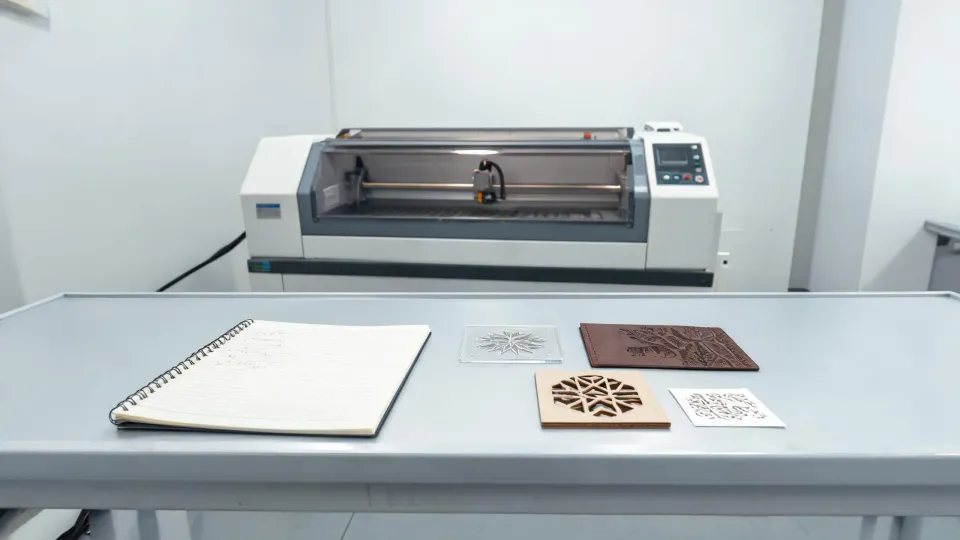
If your day-to-day involves wood, acrylic, leather, glass, stone, or painted metals, you're looking at a CO2 laser. Full stop. The 10.6 micron wavelength is absorbed by organic materials — which is why it slices through sheet acrylic with clean, nearly flame-polished edges and engraves deep, lasting marks into glass and stone.
In March 2024, a sign shop called me at 6 a.m. They needed a hundred engraved glass awards for a trade show two days later. Their existing setup couldn't handle glass at that volume and speed. The first shop I sent them to had a CO2 laser and finished the order in one afternoon. That call changed how I think about machine selection. It's not about which machine is "best." It's about matching the wavelength to the job.
Once you're on a CO2 platform, the next question is settings. If you're searching "BOSS Laser settings" expecting one master table — I get it. There isn't one, and that's not a documentation failure. Settings depend on wattage, material, thickness, even humidity. What I can give you is a mental model:
- Speed vs. power: For engraving, favor speed with enough power to avoid charring. For cutting, slow down enough to fully penetrate — one clean pass beats three sloppy ones.
- Frequency (PPI): Higher frequency gives smooth edges on acrylic but chars wood faster. Lower frequency cuts wood cleaner but leaves a rougher acrylic edge. There's no universal number.
- Focus position: If edges look burnt, cuts don't go through, or engraving comes out shallow, check focus before touching anything else. A 1mm height difference changes the kerf more than most people expect.
- Test scrap, always: Every serious manufacturer — BOSS Laser included — tells you to run a test grid before the real job. Scrap material is way cheaper than redoing a client's order.
If you're looking for a reference point, the BOSS Laser LS-3655 is a legitimate one. It's a 36" × 55" CO2 machine with enough bed to take full sheets, and it's become a common workhorse in small shops. Is it right for you? That depends on your space, volume, and budget. But when a client asks me what a serious entry-to-mid CO2 setup looks like, it's usually on the list.
Scenario B: You mark bare metal or need production-scale marking
If you need serial numbers, UID codes, QR codes, or logos on bare metal — steel, aluminum, brass, titanium — stop looking at CO2. The wavelength bounces right off. You need a fiber laser.
People think a more expensive CO2 machine can do everything a fiber laser can, just slower. That's backwards. The physics don't care about price. A CO2 laser physically can't mark bare metal. It's an absorption problem, not a power problem.
I still kick myself for the time I nearly steered a client toward a CO2 hybrid because he was comfortable with that platform. If I'd asked two more questions about his production mix — 80% metal marking, 20% cutting — I could have saved him four months of frustration. We got there eventually, but it was the expensive way to learn. (Note to self: ask about production mix first. Always.)
For dark, durable marks on stainless steel or aluminum, ask for a MOPA fiber laser instead of a Q-switched one. The adjustable pulse width lets you control heat input, which is how you get a consistent annealed mark instead of a pale gray etch.
So glad I pushed a long-time client toward a MOPA fiber laser before a big automotive contract landed. He almost went with a standard CO2 setup because everyone in his networking group had one. That contract required part marking on aluminum housings. A CO2 unit would have been a disaster.
Scenario C: You weld or repair metal — especially on-site
Here's the scenario that's grown the most in the last two years: handheld portable laser welding machines. If you're tired of grinding MIG welds, or you need to do repair work on-site, these are worth a serious look.
The heat-affected zone is small — way smaller than TIG or MIG — so you can weld thin stainless that would otherwise burn through. And because the weld bead is clean, finishing takes a fraction of the time. The first few welds won't look pretty. Not ideal. But workable. And a day of practice fixes most of it.
For buyers outfitting a shop or a fleet of service trucks, the wholesale route is worth exploring. Wholesale portable laser welding machines typically come in container quantities, and that's when you get real leverage on unit pricing and configuration options — like stepping up from a 1.5kW head to a higher-power one. Just remember that wholesale also puts training and after-sales service on you. Budget for both.
Two catches, and I'm not saying this to scare you off. First, Class IV laser safety is serious: you need a controlled area, certified eyewear, and proper training. Second, the hand-held head handles differently than a torch. Most of the operators I've worked with are comfortable after a few days, but it's not plug-and-play.
Wait — are you searching for "pain CO2 laser"?
If "pain CO2 laser" was about skin resurfacing, scar revision, or tattoo removal — this is the wrong page, but here's what you need to know anyway. That's a medical CO2 laser, a completely different device regulated as medical equipment. An industrial CO2 laser is not a substitute, and no legitimate industrial supplier will pretend otherwise.
But if you're cutting acrylic that's a pain to fabricate by hand, then yes — industrial CO2 is exactly your answer.
Price reality check (as of January 2025): Based on publicly listed prices at major U.S. laser equipment dealers, entry-level CO2 lasers run roughly $2,500–$6,000. A large-format unit like the BOSS Laser LS-3655 runs roughly $9,000–$14,000 depending on wattage and options. Fiber laser markers range from $4,000–$15,000. Portable laser welders range from $8,000–$18,000. Prices vary by configuration, region, and time — verify current rates before you commit to a budget.
How to determine which scenario you're in
Here's the framework I use when a client calls with a hot deadline:
- What's the material? Organic materials like wood, acrylic, leather, glass, or stone → CO2. Bare metal marking → fiber. Metal joining or repair → portable laser welder.
- What's the volume? A few pieces a week → outsourcing might be smarter. Hundreds a day → the machine pays for itself.
- What's the actual deadline? If you need finished parts in 48 hours, buying a machine is probably the slowest path. Call a local job shop first.
- What's the demand in 12 months? This is the question that saves people. One-off job → rent or outsource. Recurring workflow → buy.
A note for the "CO2 laser Brooklyn" searchers
If your search came from a real deadline and you're in the New York area, here's the short version: a local shop with an existing machine will almost always beat a new purchase. No unboxing, no installation, no tuning curve. Buying a machine only makes sense when the demand is recurring. In my experience, the people who survive urgent projects are the ones who separate "solve this job" from "build capability."
Bottom line
Match the wavelength to the material. Match the volume to the machine. Match the timeline to reality.
Take it from someone who's made this call under pressure more times than I can count: the people who get hurt are the ones who pick a machine before they define the job. Spend the extra hour clarifying what you actually cut, mark, and weld. It'll save you months.