-
1. Do I really need both a CO2 laser and a fiber laser?
-
2. Is the Boss Laser LS3655 too large for a UK workshop?
-
3. What would you avoid doing with a CO2 laser plate-maker?
-
4. Is an air cooled laser welding machine enough for production work?
-
5. Should I buy direct from an import source or use Boss Laser UK?
-
6. What hidden costs show up when you add fiber laser marking?
-
7. If you started today, what would you not skip?
I've been running a six-person laser workshop in the UK since 2019. Since then, I've personally made and documented around $11,000 of laser-equipment buying mistakes. If you count rush freight and redo jobs, it's more. This FAQ is what I wish someone had handed me before I ordered the first machine.
1. Do I really need both a CO2 laser and a fiber laser?
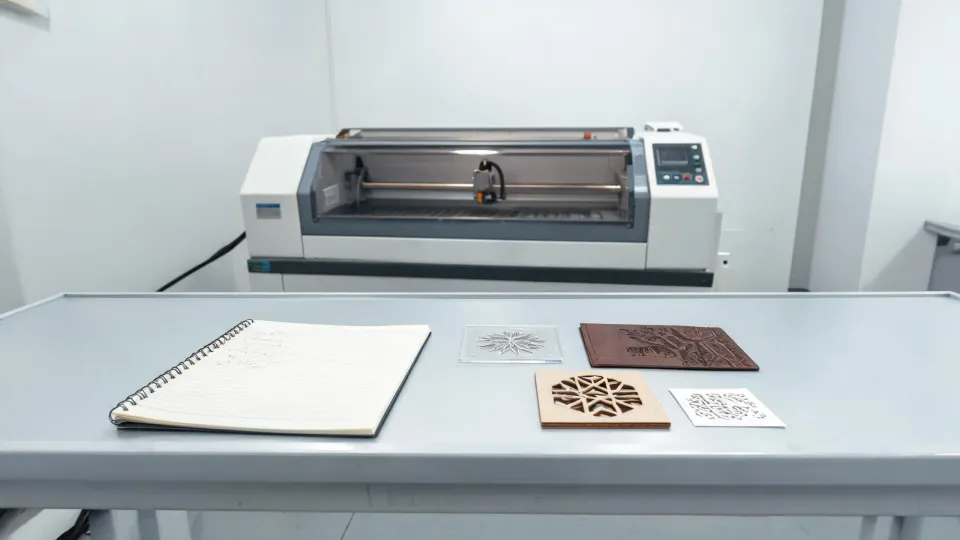
Short answer: yes, if you plan to work with metal and organic materials. For wood, acrylic, rubber and leather, a CO2 laser is the right tool. The Boss Laser LS3655 I use every day is a CO2 machine, and it cuts and engraves those materials with good speed and edge quality.
But when the job calls for stainless steel serial numbers or engraving on aluminium, a CO2 laser won't do it properly. You need a fiber laser marking machine. The wavelengths are different; you can't solve that with a lens swap. Ignoring it cost me $2,300 in outsourced work plus a week of delays. Now I keep the CO2 for plate-making and sign work, and the fiber laser for metal marking. It's two machines, not one.
2. Is the Boss Laser LS3655 too large for a UK workshop?
It's large, but the bigger surprise is the full footprint. The bed is about 36 x 55 inches (914 x 1397 mm), and you need clearance around the cabinet, a chiller, and an exhaust or filter unit. I measured only the bed when I bought my first LS3655 and forgot to check the workshop doorway.
In September 2022, the delivery driver couldn't get the crate through a 34-inch door. That cost $450 for a temporary lift and two lost production days. Boss Laser UK offered a pre-installation site visit; I declined because I figured it was obvious. It wasn't. Take the site visit.
3. What would you avoid doing with a CO2 laser plate-maker?
Run a test on the actual material before the client's order. In 2022, I processed a 300-piece plate order without testing a sample. The settings looked correct in the software, but my focus was wrong. Nearly $1,650 in polymer materials ended up in the bin.
Now our team uses a pre-check target with fine lines and halftone tints at different lpi values. And if a customer needs a brand colour match, we compare their substrate against a Pantone chip. Don't promise a Delta E below 2 on a laser plate just because the file looks correct. I've learned to prove it on the exact material first.
4. Is an air cooled laser welding machine enough for production work?
It's enough for light fabrication, not for every repair that walks in. We added an air cooled laser welding machine because it has no chiller and starts faster than a water cooled unit. For 0.8mm to 3mm stainless steel, it's worked well.
The mistake came when I tried to weld 5mm aluminium without checking the operator manual. The result was brittle and ugly, and I had to redo the part at my own cost: $600 plus a one-week delay. The air cooled laser welding machine is not weak, but it has a range. Ask Boss Laser UK support before you say yes to a job outside that range.
5. Should I buy direct from an import source or use Boss Laser UK?
I did both and learned that the first price is not the final price. The imported machine was cheaper on paper, but freight, customs, VAT, and a local electrician added a lot. Then the tube failed and nobody in our time zone answered support. The machine sat idle for three weeks.
When we switched the critical work to a Boss Laser LS3655 through Boss Laser UK, I asked for an itemised quote that listed delivery, installation, chiller, extraction and training. It looked like the higher quote. It was the lower total cost. Now I tell everyone to ask what's not included before asking how much.
6. What hidden costs show up when you add fiber laser marking?
Most fiber marking lasers are air cooled, which means no chiller to maintain. That's the good news. The hidden costs are in tooling. Our first fiber laser marking quotation did not include a rotary fixture. When we agreed to engrave stainless steel tumblers, we had no way to hold them without turning the job by hand (ugh). It took three times as long and we still skipped positions.
Add rotary attachments, a fume extractor, and spare focusing lenses to the quote at the beginning. If someone asks for a fiber laser marking price, include fixture time as a line item. I can't say this enough: the laser is the cheap part. The missing fixture is what stops production.
7. If you started today, what would you not skip?
I'd buy the Boss Laser LS3655 first for CO2 work, add a fiber laser for metal marking, and think hard before buying an air cooled laser welding machine unless I had a consistent flow of thin-section repair jobs. More importantly, I would test every material before promising a finish, and I would use the UK support team's advice before every significant purchase.
My experience is based on one UK workshop handling roughly 200 projects a year. If you only cut wood signs, your answer will be different. If you mark high-volume metal parts, you might need a bigger fiber laser first. Don't copy my shopping list blindly. Do copy the habit of asking what's not included and proving the result before you promise it.