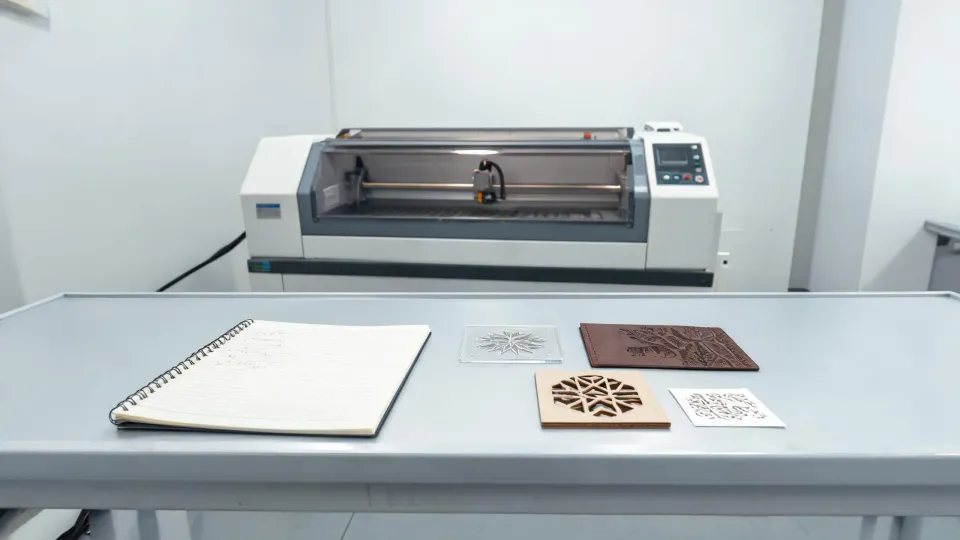
When I took over equipment purchasing in 2021, my first big project was helping our workshop move from outsourcing to in-house laser cutting. The Boss Laser LS-1420 was on the shortlist. Fast forward a few years and I've run the numbers on buying new versus tracking down a used unit. The answer wasn't as straightforward as we expected.
If you're weighing a brand new LS-1420 against a used model, here's a breakdown based on our internal vetting process. The goal is straightforward: help you decide where your money is best spent. We're comparing the two options across four dimensions: initial cost, the condition of the machine, support and warranty, and the technology itself.
Upfront Price: The Obvious Starting Point
The sticker price is usually where this conversation begins, and used machines win on the surface. A new LS-1420 will set you back anywhere from $8,500 to $11,000 depending on the configuration and any promotions from Boss Laser. A used model? I've seen listings on forums and auction sites like eBay or Craigslist range from $4,000 to $7,000. That's a serious difference.
But here's what I learned. Price is just the entry ticket. The hidden costs are where the deal is made or broken. It took me a failed first negotiation to realize that. In 2023, we nearly bought a used LS-1420 for $4,500 and then found out the seller had no documentation for the tube or the power supply. Replacing a CO2 tube on these units costs roughly $800–$1,200 if you install it yourself, plus shipping and the risk of a broken tube in transit.
So, put another way: the used machine was a $4,500 gamble that could easily turn into a $6,000 plus machine with no warranty. That's a huge difference in total cost of ownership. The price comparison is only favorable if the machine is in verified working condition.
Machine Condition: The Invisible Factor
Your next comparison point should be the machine's actual condition. A used laser cutter from a reputable shop that's just upgrading is a different product entirely from one that's been sitting in a garage for two years.
The concern here isn't just about scratches or dents. For CO2 lasers, the lifespan of the glass tube is a finite resource, typically 2-4 years depending on use. A used machine might have 1,000 or 10,000 hours on the tube. That number changes the risk profile completely.
I remember a specific incident in March 2024. We were about to buy a machine listed as having a 'recently replaced tube.' Took an RF meter and a lens inspection mirror to check it—turns out the alignment was off and the lens had micro-cracks. The seller said it was 'working perfectly last month,' which likely meant it was working when they stopped using it, but not anymore. This is not a knock on the machine itself. It's a cautionary tale about verifying the condition.
If you're checking a used unit, bring a test file. Cut a piece of 3mm plywood and engrave a small board. Check the beam quality and see if there's any drama with the motion system. On a new machine, these are non-issues.
Support and Setup: The Real Cost Difference
Here is where the comparison gets a bit one-sided. When you buy new from Boss Laser, you get a support system that's pretty solid. Part of the purchase price goes toward documentation, a manual that matches your firmware, a startup guide, and access to technical support. In our experience, they answer questions about alignment and settings within a day or two.
With a used purchase, you're flying solo. If you've ever had to troubleshoot a laser start-up failure, you'll know that specific feeling of isolation when the manual is just a PDF someone emailed you and the previous owner doesn't pick up the phone. There's no software license transfer, no account for file downloads, and often you can't even get the firmware updates unless you jump through hoops.
Also consider the hidden cost of downtime. If a new machine has an issue, you're down for a few days as they send a replacement part. If a used machine fails, you could be down for weeks while you source parts and diagnose the issue yourself. If you're running a business, that time is often worth more than the money you saved on the used price.
The Technology Question: Same Machine, Different Era
One option is to assume that the used LS-1420 is identical to the new one since it's the same model number. But that's not accurate. Boss updates the controller boards, the software, and sometimes the mechanics during a model's life.
For instance, newer LS-1420 units come with a more refined motor driver setup and updated firmware that supports a faster 'print' mode. An older used model will still have that trusty 80W tube and the stepper motors, but the fine-tune adjustments might be different. This matters if you're doing high-detail engraving where the Z-axis accuracy is make or break.
Also, the ecosystem around the machine has changed. The current generation of the LS-1420 is fully compatible with the latest LightBurn software. A used model from 2019 or earlier may need a specific version that doesn't have the same functionality. That's a small thing, but then again, it can be a headache if you're used to newer interfaces.
The technology inside is still a CO2 laser with the same fundamental principles, but the electronics and the controls have evolved since the model was first released. For some, this difference is negligible. For others, it's a deal-breaker.
So, Which Is It?
If you have a low-budget startup, you have test files, you're comfortable with hands-on troubleshooting, and you can afford the downtime risk—a used LS-1420 is a viable way to get into the game without breaking the bank. It's the 'promising newcomer' of the manufacturing world. Small doesn't mean unimportant; it means potential.
But if your laser is the heart of your production line, then buy new. The support, the warranty, and the peace of mind are part of the cost. The difference between a machine running and a machine down is the real cost factor.
One last thing: check the seller's story. The vendor who saved me a few dollars but can't provide a proper machine history is the same as the one who couldn't provide a proper invoice. It cost us $2,400 in lost time. That is the biggest factor in this whole analysis. It took me 3 years and about 50 orders to understand that factory support is worth more than a good discount.