-
The Surface Problem: It Worked in the Demo
-
Hidden Cause 1: Materials Are More Variable Than the Name Suggests
-
Hidden Cause 2: A Laser Welder Is Not a Welding Process
-
Hidden Cause 3: A Low Base Quote Is Not Total Cost
-
The Cost of Ignoring the Gap
-
The Practical Fix: Buy an Acceptance Protocol, Not Only a Machine
In early 2024, a customer called me after their new laser machine started producing inconsistent edge cuts on painted steel. They had cleaned the optics, changed speed, and adjusted focus. The machine checked out. When the manufacturer ran the same file in their demo room, it looked perfect. The customer wasn't doing anything wrong. The process assumption was wrong.
I'm the quality/compliance manager at Boss Laser. I review every machine before it reaches final test—roughly 200 unique configurations and process samples per year. Over the last four years, I have seen this exact situation repeat across different industries. What looks like a hardware failure is usually a gap between what a spec sheet claims and what a real material will do.
The Surface Problem: It Worked in the Demo
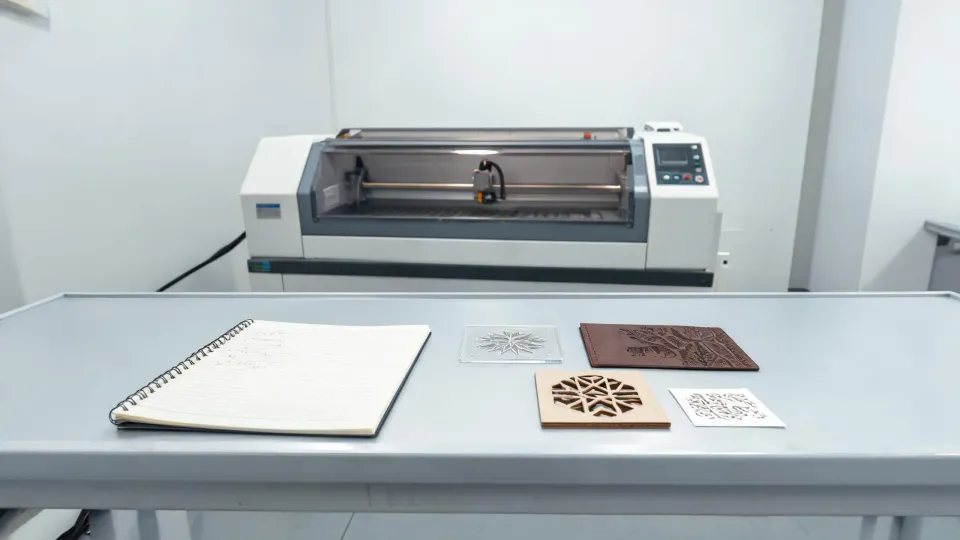
Many buyers assume a 'laser cutting machine' is a turnkey device: load material, press start, get a finished part. It's closer to a precision tool that has to be configured for every material family. The demo room has clean, uniform material and a trained operator. Production floors have sheets with oil residue, coatings, variable thickness, and operators who need to hit a launch date.
A spec sheet that says 'stainless steel up to 8 mm' means the machine produced a cut on some stainless sample, under some conditions. It usually doesn't say what those conditions were. It doesn't describe the surface finish, the back-side dross, or the speed at which the cut stops being economical. That absence is the first source of trouble.
This is why I'm suspicious of clean data sheets. Two machines from two different suppliers can have similar wattage, but their behavior on tough jobs will diverge because one supplier documents limitations and the other doesn't. The documentation tells you they actually put parts on the bed and tested them.
Hidden Cause 1: Materials Are More Variable Than the Name Suggests
When someone searches for 'boss laser materials', they might expect a universal list of things the laser can handle. A material list is a starting point, not a guarantee. There is a difference between 'this laser can process a material by this generic name' and 'this laser can produce a consistent edge finish on the particular batch of that material on your receiving dock'.
Take coated metal. In my day job, we see more quality problems on painted or powder-coated substrates than on bare metal. A CO2 laser has to interact with whatever is on the surface first. The coat—the paint, lacquer layer, or powder coat—can be the actual variable. Some pigments absorb infrared energy cleanly; others reflect or re-radiate it. A gloss white coating behaves differently from a matte black coating. If the coat thickness varies across a part, the amount of energy reaching the base material varies too.
The phrase 'co2 laser coat' shows up in our inspection notes often. In one case, a customer needed to engrave through a clear top coat to expose a colored layer underneath. On a flat sample, the contrast was perfect. On the actual production part, which had a slightly thicker clear coat on a radius, the resulting color shifted more than a trained eye could tolerate. In color control, the industry tolerance for brand-critical work is Delta E below 2 in PANTONE terms. The shift on that part was closer to Delta E 4—visible to most people. The machine had not changed at all. The material had.
Hidden Cause 2: A Laser Welder Is Not a Welding Process
The same logic applies to fiber and welding systems. A customer asked for help qualifying a superalloy component laser welding machine for Inconel brackets. The power source in the quote was a Langmuir fiber laser, and the beam quality numbers were excellent. The vendor's weld coupons looked clean, with full penetration and no cracks.
Then the real parts arrived. The brackets had a thin oxide layer from a previous heat treatment, a slight gap mismatch at the joint, and a requirement for zero microfractures. The clean, flat coupons had none of those complications. The first production welds cracked. Not because the laser failed—because the process had not been validated for the actual component geometry and surface condition.
Welding superalloys is particularly unforgiving. Heat input, preheat, interpass temperature, and cooling rate all affect whether a weld stays solid. A machine data sheet won't tell you the right weld schedule. It can tell you what power is possible, but not which joint design gives you a repeatable result. That is a process engineering question.
I have sat in rooms where someone praised a Langmuir fiber laser source as ideal for their application, and I had to ask: ideal under what joint configuration? The blank look that followed told me exactly where the project would fail.
Hidden Cause 3: A Low Base Quote Is Not Total Cost
Then there is cost. I believe transparent pricing is part of quality. If a machine quote omits necessary accessories, or if the initial price seems too neat, I look for the hidden line item. I've learned to ask 'what's not included' before 'what is the price'. A vendor who lists all fees upfront—even if the total looks higher on page one—usually costs less by the end.
We saw a situation where a superalloy component laser welding machine quote came at $18,000. Well, the base quote was $18,000. After gas delivery, tooling, training, and spare consumables, the final cost was just over $26,000. That spread is not necessarily dishonest. Some of those costs are real. But if the vendor knows they are required, they should list them upfront.
Price transparency is also a signal of predictability. A machine that arrives with an unexpected $8,000 of necessary extras is a machine that was sold under an incomplete specification. The opposite—a transparent total price—shows the supplier has thought about how the machine will run in production, not just how to get a signature.
The Cost of Ignoring the Gap
Let me put a concrete number on it. In early 2024, I audited a production run where 47 superalloy parts had been scrapped. The project had chosen a machine package partly because it saved $4,000 against another quote. Their acceptance test used a clean sample coupon, not a real production part. When the production run started, porosity appeared because the test had not accounted for surface contamination. The scrap, plus rework and delayed delivery, cost about $22,000.
That is the point I keep coming back to: a machine does not produce parts; a process does. If the process is not defined and validated before you sign, the 'cheap' machine can become the expensive lesson. This is not about any one brand, including ours. It is about the way equipment is evaluated.
The Practical Fix: Buy an Acceptance Protocol, Not Only a Machine
The good news is that this is fixable before you spend the money. Define the acceptance conditions in the same language your manufacturing engineers use. For marking and color, state a Delta E tolerance. For laser welding, state cleanliness, penetration, porosity, and crack allowances. For cutting, state allowable edge roughness, kerf width, and the production throughput you need—not just maximum speed.
Test with the real material. If your parts arrive with oily residue, a coating, or mill scale, test with that. If your part has thickness variation, test the thickest and thinnest points. The goal is to get the vendor to sign off on the actual production process, not just the machine.
This is a short list, but it consistently catches the failures I see. When I implemented a stricter verification protocol on our side in 2022, our first-run acceptance rate went up by roughly a third. The cost of that verification was tiny compared to what it saved in rework and lost trust.
- Tell the supplier what you really make. Provide a sample or representative part before buying. If you don't have one, budget for a development run.
- Define the acceptance test in writing. For color-critical jobs, reference PANTONE or an agreed physical sample. For structural welds, name the standard and the defect limits.
- Ask where the process will struggle. A good engineer will tell you the process window. If the salesperson says 'no limitations', keep looking.
- Include consumables and support in your comparison. A base quote is not deceptive if it comes with a list of what it excludes. If there is no list, treat the quote as incomplete.
At Boss Laser, I still review machines and process samples before sign-off. We publish material guides and a 'boss laser materials' page. But I treat those guides like ingredient labels, not recipes. They don't tell you whether a particular batch of acrylic has a lower melting point or whether your clear coat is too thick. A transparent conversation about those variables is more valuable than a blanket promise.
That is not a reason to avoid buying a Boss Laser cutting machine. It is a reason to buy one from a supplier who will work with you on the process. A spec sheet is a start. Quality arrives after the process is proven on your part, under your conditions, with your tolerances. That is the part no demo room can show you—and the part that determines whether your investment becomes a tool or a trophy.