-
The First Argument: Misalignment Makes Even a 'Premium' Machine Look Cheap
-
The Second Argument: Your Customer Can Tell the Difference (Even If They Can't Explain It)
-
The Third Argument: 'Good Enough' Material Settings Are a Hidden Brand Killer
-
Addressing the Objection: 'But a Higher-End Machine Is Too Expensive for a Small Shop'
-
A Final Word on Support and Community
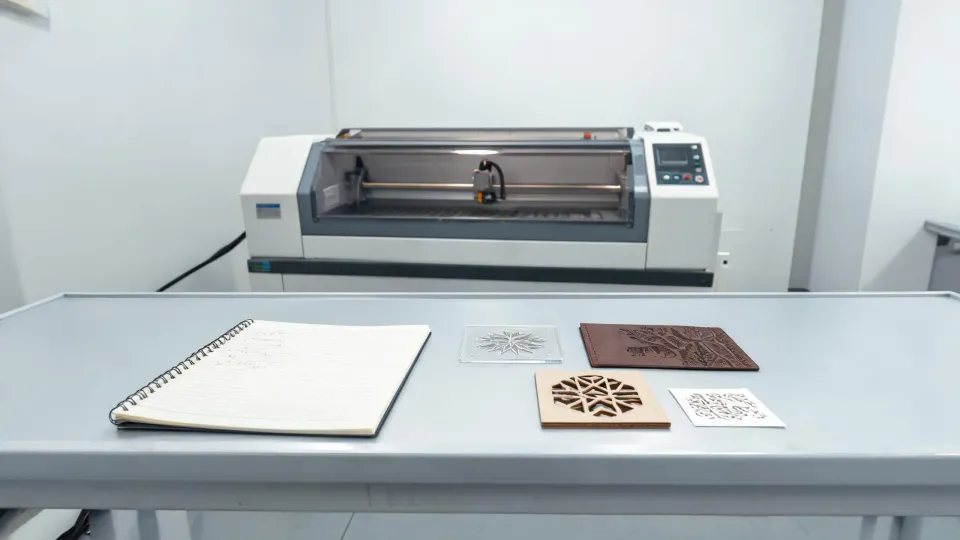
I think there's a dangerous assumption floating around in the laser community. People get obsessed with the machine itself—its wattage, its brand, its price tag—and they forget that the only thing your customer ever sees is the output. They don't see your BOSS Laser LS-1630 sitting in your shop. They see the engraved sign on their door, the custom cutting board you made for their client, the marked part sitting on their assembly line.
I'm an office administrator for a mid-sized company. I handle all our procurement for a few different vendors, and about four years ago, I also started managing the purchase of our in-house laser equipment. I'm not a laser operator. I'm not a designer. I'm the person who has to justify the expense to finance and make sure the operators have what they need to do their job right. So when I talk about this, I'm coming from a purely practical place.
My unsolicited opinion? You can have the best laser on the market, but if your alignment is off, your material settings are wrong, and your support is lousy, your "premium" machine will produce garbage. And garbage output makes your entire company look amateur. It's not about the machine. It's about the finished piece.
The First Argument: Misalignment Makes Even a 'Premium' Machine Look Cheap
I don't have hard data on how many shops regularly check their laser's alignment. My guess, based on reading forums and talking to support reps, is that it's a lot fewer than you'd think. I know when our first operator started, he assumed the machine would stay aligned forever. We were using a well-known brand, so why wouldn't it?
Within a month, we were seeing inconsistent cuts on 1/4 inch acrylic. The top edge was perfect, but the bottom edge had a slight taper. It wasn't a major issue for internal prototyping, but when a client paid for a precision cut, it looked wrong. We spent a week fiddling with power and speed settings before someone finally asked, "Wait, when did we last check the beam alignment?"
We hadn't. Ever.
Alignment is the foundation of everything. If the beam isn't hitting the center of each mirror and the lens dead-on, you're chasing issues with other settings that will never fully fix the problem. A BOSS Laser or any other CO2 machine requires this step. In our 2024 vendor consolidation project, I started asking suppliers how they handled alignment training. The ones that offered a clear process or included it in the manual got higher marks from me. The ones that just sent the machine and said "read the manual"? I flagged them as high risk for support calls.
The Second Argument: Your Customer Can Tell the Difference (Even If They Can't Explain It)
This is the one that hits close to home for me. I switched from a budget paper vendor once—saved the company about $800 a year. But the paper had a slight yellow cast to it, and it didn't hold the ink as sharply. No one in accounting said anything. But our marketing manager started complaining that our client mailers looked "cheap." She couldn't say why. She just knew they didn't look right.
It's the same with laser work. If the kerf is rough, the engraving is inconsistent, or the edge has burn marks, your customer sees it. They might not say, "This edge has 2 degrees of taper due to poor beam alignment." They'll just think, "This piece feels lower quality." They'll attribute that feeling to your workmanship, not to the machine settings.
I went back and forth for a month on whether to push for a more expensive laser brand. Our team wanted a 60W CO2 machine for cutting wood and engraving glass. The cheaper option was... well, cheaper. The BOSS Laser option was a few thousand more. The numbers said go with the cheaper option. Our accountant was happy. But something felt off. My gut said we'd spend that money later in frustration.
I'm glad I listened to my gut. The BOSS machine came with comprehensive material settings. Not just a generic list, but settings that actually worked. That alone saved us hours of testing. And when we had an alignment issue six months in, the support team helped me walk the operator through it on a video call. That was worth the price difference. The $50 difference on paper translated to noticeably better client retention and fewer internal headaches.
The Third Argument: 'Good Enough' Material Settings Are a Hidden Brand Killer
This is the one I wish I had tracked more carefully. What I can say anecdotally is that the quality of the material settings library matters way more than I initially thought.
We make a lot of small gifts for clients—engraved coasters, glassware, acrylic signs. When we first started, we were using a machine with very basic preset lists. For glass etching, it was a single "Glass" profile that never worked quite right. We were getting hairline cracks consistently. We thought that was just how it worked. We'd make 20 coasters and throw 5 away.
Then we tried a BOSS laser for a demo. Their settings for glass were different. They had profiles for different types of glass. We used them and the cracking rate dropped to zero. That's not a machine issue. That's a knowledge and support issue. The cheaper machine had the same basic components. But it didn't have the refined profiles. And we, as a buyer, didn't know what we were missing. We'd look like amateurs to our clients because we assumed the machine we bought had good defaults.
I'm not saying every BOSS setting is perfect out of the box. Every machine and every material requires testing. But the difference between a manufacturer that invests in building a robust settings library and one that just ships the machine with a generic list is honestly massive. It's the difference between spending the first month learning your craft and spending the first month fighting your machine.
Addressing the Objection: 'But a Higher-End Machine Is Too Expensive for a Small Shop'
I get it. Seriously, I do. I report to finance. I don't get to spend money without justification. If you're a small shop or a hobbyist, spending an extra $2,000 on a laser feels impossible.
Honestly, I looked at the budget options for a long time. And for some jobs, they are probably fine. If you're only making prototypes for yourself or selling on Etsy for $10 a pop, the risk is lower. A burn mark here or there isn't the end of the world.
But here's where my experience kicked in. When I thought about the long-term cost—the lost time on bad settings, the client who doesn't come back because his nameplate looked rough—the extra money felt like an investment in my own reputation. I'd rather spend more upfront and get a machine that helps me look professional on day one, than spend less and constantly apologize for the quality.
It's the same logic as buying a reliable car for a sales job. You could get a beater. But would you trust it to get you to an important meeting on time? The laser is your production vehicle. Don't cheap out on the thing that directly creates your product.
A Final Word on Support and Community
I'm not 100% sure why some vendors build a great community and support infrastructure while others don't. My best guess is it comes down to internal priorities. Some companies see the machine as a one-time sale. Others see it as the start of a relationship.
For me, the decision came down to one question: Who do I trust to help me when this expensive piece of equipment stops working correctly?
A vendor who offers clear documentation, active forums, and a responsive support team is worth far more than one who offers a lower price tag and radio silence. I've seen this pattern many times. But when I say "many," I do not mean just a few—I mean consistently across dozens of vendor relationships in my career. The ones who vanished after the sale always cost me more in the long run. They weren't cheaper. They were just delayed expenses.
So yeah. I believe the machine matters. But the output quality? That's what defines your brand. And the machine is just one part of that system. The alignment, the material settings, the support network—those are the real levers that make you look like a pro.