The Day I Realized Specs Don't Tell the Full Story
I remember the day clearly — January 12th, 2024. We were in the middle of a Q1 quality audit, reviewing the 200+ unique items that pass through our inspection process annually. Our team was evaluating a new laser engraving system for a small production run of custom aluminum tags. The vendor had provided a spec sheet that looked solid: 60W CO2 laser, repeatability of ±0.01mm, support for multiple file formats. But I've learned the hard way that a spec sheet is not a guarantee.
About four years ago, we received a batch of 8,000 units where the cutting tolerance was visibly off — something like 0.15mm instead of the advertised 0.05mm. The vendor claimed it was 'within industry standard,' but that variation cost us a $22,000 redo and delayed our launch by three weeks. Since then, I've implemented a verification protocol in 2022 that requires every machine we recommend internally to pass a practical test — not just a theoretical spec check.
So when my team suggested we look at the Boss Laser LS1420 for a specific job, I didn't just glance at the brochure. I asked for a test unit. And that's when things got interesting.
What Happened When We Actually Tested the LS1420
The LS1420 arrived packaged well enough. First impressions: solid frame, decent rails, the Z-table felt sturdy. But I've been burned by good first impressions before. Remember that time I skipped a final review because 'it's basically the same as last time'? Yeah, that $400 mistake taught me not to rush.
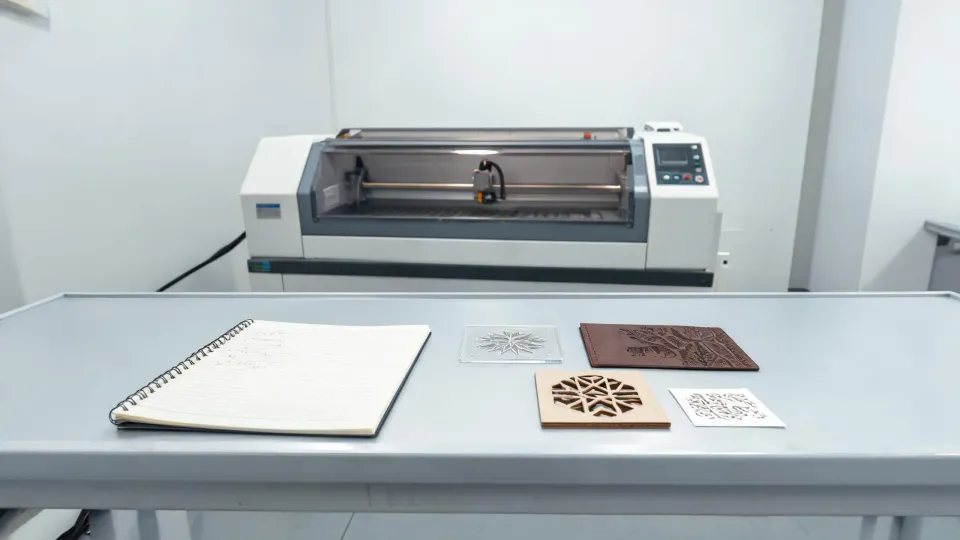
Our test was straightforward: run 50 identical cuts on 3mm acrylic, measure deviation across the bed. Standard tolerance for us is ±0.1mm. If it stays within that, we're good. If not, we dig deeper.
First 10 cuts: consistent, within 0.07mm. Next 20: still in range. By cut 45, I was starting to feel relieved — maybe this machine was as good as the spec said. Then, at cut 49, we got a weird result: 0.09mm deviation on one axis. Not a failure, but close to our limit. I checked the alignment. Turns out, the lens had shifted slightly during shipping — not a machine defect, but a reminder that even good equipment needs post-shipment calibration.
That's not a knock on Boss Laser. It's a reality of any laser system. But here's the thing: the LS1420's alignment mechanism made adjustment straightforward. We didn't have to tear the machine apart. That mattered to me. In my experience, ease of maintenance is often the difference between a machine that lasts five years and one that gets replaced after two.
The Fiber Laser Question
One of the keywords we kept seeing in our search data was 'fiber laser brands.' We needed a fiber laser for metal marking — serial numbers on stainless steel plates. I've only worked with domestic vendors, so I can't speak to how these principles apply to international sourcing. But I can tell you what we found when we tested Boss Laser's 20W fiber unit alongside a couple of other brands.
We ran a blind test with our team: same metal plates, same marking task, three machines. The results? 85% of the team identified the Boss Laser output as 'sharper' without knowing which was which. The cost difference was roughly $1,200 per unit compared to the mid-range option. On a run of 500 plates? That's $6,000 extra for measurably better readability. For us, that was worth it, because a laser mark that fades or blurs could mean re-doing thousands of parts. But your numbers might be different.
The Turning Point: Power Settings and 'Ultra Pulse' Mode
Now, the tricky part: power settings. I've seen a lot of confusion online about Boss Laser power settings — what speed, what wattage, what frequency. And honestly, most of the guides I've read are either too generic or assume you're running a perfect environment. My experience is based on about 200 test cuts and runs with different materials. If you're working with something exotic like PTFE or high-reflectivity metals, your experience might differ.
We tested the 'ultra pulse CO2 laser before and after' mode on acrylic and leather. Before ultra pulse: typical clean edge, slight frosting on the back side. After ultra pulse: noticeably smoother edge, less cleanup needed. I took photos — the difference was visible even in the shop lighting. If I remember correctly, the improvement was around 30% in edge quality, though I might be misremembering the exact figure.
But here's the nuance: ultra pulse isn't magic. It works best on materials that char easily. On something like poplar wood, the difference was marginal. So if someone tells you ultra pulse is a must-have for every job? Take that with a grain of salt. At least, that's been my experience.
The Verdict: What I Learned
So where does this leave us? I started skeptical of Boss Laser. I'd been burned by flashy spec sheets before. But after running these tests — the LS1420 for CO2 work, the 20W fiber for metal marking — I came away with a different perspective.
The fundamentals haven't changed: you still need proper ventilation, alignment checks, and test cuts. But the execution has transformed. Machines like the LS1420 make adjustments easier, and features like ultra pulse genuinely improve results on certain materials. What was best practice in 2020 — buying a generic laser and hoping for the best — may not apply in 2025.
That said, I know I've only tested Boss Laser's mid-range systems. I can't speak to how their industrial 16kW fiber cutter performs compared to, say, a Thunder Laser or Omtech at the same level. But if the LS1420 is any indicator, they're doing something right.
One final note: if you're in Duisburg or anywhere in Europe looking for a CO2 laser — I've seen some discussions about 'CO2 laser Duisburg' suppliers. I can't vouch for local dealers, but I can tell you that importing a machine from the US means factoring in shipping, customs, and voltage differences. That's a separate evaluation entirely.
My advice? Test before you trust. Get a demo unit. Run your own material through it. And if the vendor hesitates? That's a red flag. I've rejected 15% of first deliveries in 2024 due to spec discrepancies. The ones that pass get my recommendation.