-
There Is No 'Best' BOSS Laser
-
Before We Talk Machines: Three Sorting Questions
-
Scenario 1: Mixed Materials and Small-Batch Production → CO2 (BOSS LS-1630)
-
Scenario 2: Stone and Metal Work → Fiber Laser, Sized to Your Deadline
-
Scenario 3: Importing or Starting a Laser Business → HS Code and Support
-
How to Decide Which Scenario You're In
-
The Bottom Line: A BOSS Laser Review With No Universal Winner
There Is No 'Best' BOSS Laser
If you're looking for a one-line answer, stop. This is not a normal BOSS Laser review. I coordinate production for a small fabrication shop, and I've spent six years triaging rush orders—more than 200 of them, including jobs that needed same-day delivery. In that time, I've learned that the 'best' machine depends on what you're cutting, how fast you need it, and whether someone will pick up the phone when a tube dies.
So let's sort you into a scenario first. Then I'll tell you what I'd buy for each one.
Before We Talk Machines: Three Sorting Questions
Ask yourself these in order. What materials do you process most? What is the worst-case deadline? And how much technical support do you actually have? The reason I ask in that order is simple: material determines the laser family, deadline determines the power, and support determines whether you'll survive the first breakdown.
Here are the three scenarios I see every week in my own shop:
- Mixed materials, short runs: wood, acrylic, glass, leather, rubber.
- Stone and metal marking: granite, marble, steel, stainless.
- Starting a laser business or importing: customs, HS codes, documentation.
Scenario 1: Mixed Materials and Small-Batch Production → CO2 (BOSS LS-1630)
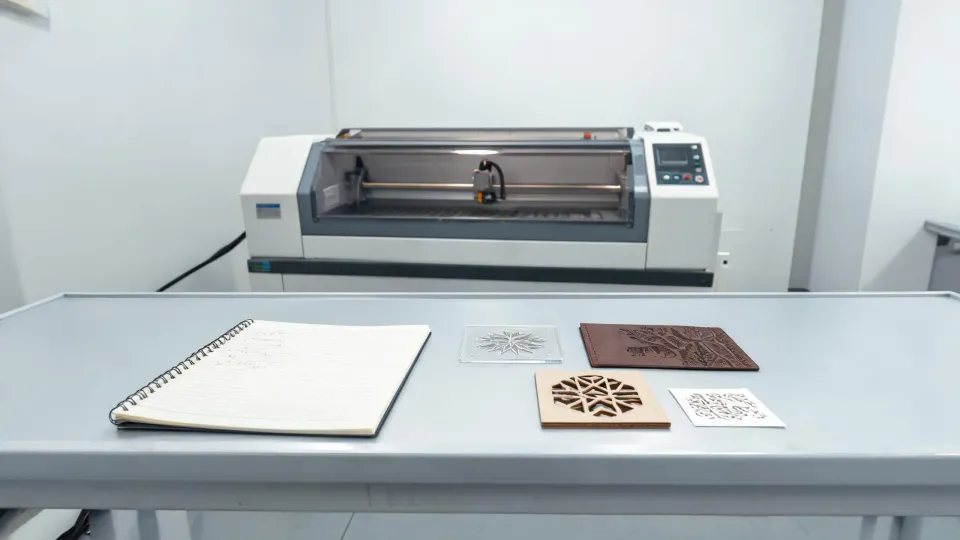
If your shop makes signs, awards, prototypes, or product samples, a CO2 laser is the workhorse. The BOSS LS-1630 is the model I see most often in shops like ours. It has a 16-by-30-inch work area, which handles the majority of small-batch jobs. If you search for 'boss-laser' online, you'll find a lot of dealers and video reviews before you reach the actual spec sheet. Take the time to find the official page.
Now, I'm not going to claim the LS-1630 is perfect. It's not. What saves it is the documentation and support. In March 2024, a client needed 100 acrylic plaques engraved and cut before a Tuesday event. Normal turnaround would have been five days; we had about 36 hours. The LS-1630 handled the first two batches fine. Then the focus shifted. We pulled up the manual—and this is where I'll sound like an old guy—we actually read it. The troubleshooting page for focus and lens alignment fixed the problem in twenty minutes.
That's why I tell people to search for 'boss laser ls 1630 manual' before they buy, not after. Read the maintenance section. If the lens cleaning routine sounds like a hassle, this kind of machine will make you unhappy. And if you take small orders, don't apologize for it. The first client who ordered 25 acrylic coasters from us was ignored by two bigger shops. Now that client sends us a $3,000 order every quarter. Small orders are how you build a book of business.
Scenario 2: Stone and Metal Work → Fiber Laser, Sized to Your Deadline
A CO2 machine won't do much for granite or steel. This is where fiber lasers come in.
Let's clear up a phrase that confused me for longer than I'd care to admit: 'laser fiber stone'. What people are really asking is, can a fiber laser engrave stone? Yes, it can. It leaves a dark, crisp mark on granite, slate, and some marbles. What it doesn't do is deep-carve stone. For that you need a CNC router, not a laser. I explain that to clients before every stone quote, because 'engraved' means different things to different people.
For stone marking alone, a 20W or 30W fiber laser is enough. But if you're doing production batches of marked metal parts, or you occasionally need to cut thin stainless, a 150w fiber laser is worth the jump. It marks faster, which directly matters when someone's deadline is measured in hours. The October 2024 job that changed my opinion: a client needed 12 engraved granite markers for a memorial ceremony in 48 hours. We had 48 hours. We used a fiber laser at lower power on a piece of matching granite first. That test took twenty minutes. The job took about two hours. If we had skipped the test, we might have delivered 12 pieces of disappointing stone.
The 150w fiber laser is not a starting machine. It's a 'we already have volume' machine. If you're just entering fiber, buy the smaller unit and spend the savings on good extraction and training.
Scenario 3: Importing or Starting a Laser Business → HS Code and Support
The third scenario is less about the machine and more about the system around it. If you're buying a laser marking machine to start a service business, or you're importing for resale, customs classification becomes part of your deadline.
I have a personal scar here. Early in my career, I trusted an HS code written on a vendor's invoice. The shipment sat at customs for eight days while our client's deadline passed. Now I verify everything. If you search for 'hs code laser marking machine', you'll get a mix of outdated forum answers and overseas agent posts. As of January 2025, the authoritative source for U.S. classifications is the HTS database at hts.usitc.gov. Laser machine tools generally fall under heading 8456, but the right subheading depends on the machine's function and workpiece. Confirm with a broker before you wire money.
This is one reason domestic support matters. A BOSS Laser unit in the U.S. misses some of the customs risk. But if you're outside the U.S., or buying from abroad, do not assume. The time you spend checking can save you a nightmare.
How to Decide Which Scenario You're In
Still not sure? Go through these four checks:
- Material check: wood, acrylic, glass, leather → CO2. Metal or stone → fiber.
- Volume check: occasional jobs → 20W to 50W fiber. High daily throughput → 150w fiber laser.
- Deadline check: if you keep promising impossible turnarounds, buy a machine from a seller with real service and documentation.
- Customs check: if you're importing, verify the HS code before you pay. Do not rely on the seller's blog.
And if you still can't choose, rent time on a machine or send a test file to a local shop. Testing your actual material is not optional. No seller can guarantee perfect results on a material you've never tested.
The Bottom Line: A BOSS Laser Review With No Universal Winner
After six years of rush jobs, I've come to believe that the best machine is the one you know how to run in an emergency. That sounds obvious, but too many buying decisions are made from specs, not from maintenance and support. Read the manual. Run the test. Know your HS code. Then the 3 a.m. call feels less like a crisis and more like a procedure.
And as a shop that started from nothing: treat small orders like real business. The vendor that laughs at your $200 first order will not get your $15,000 next one. The machine you buy should be a partner for small jobs and big ones alike. That's the standard I use, and it's the reason I keep coming back to BOSS Laser.